
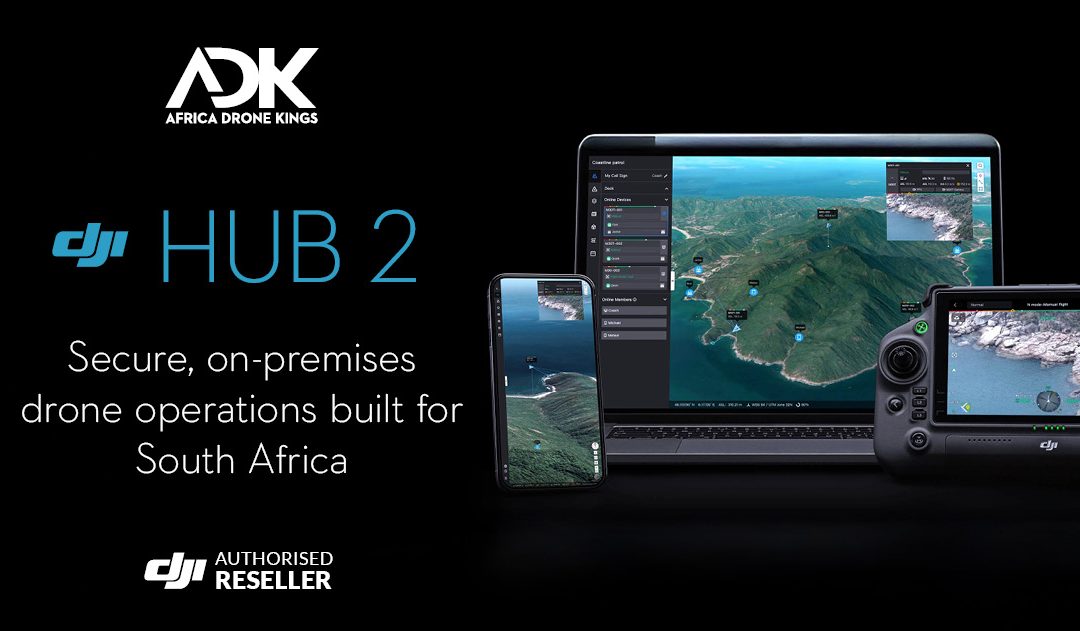
Empowering South Africa’s Infrastructure with Secure, On-Premises Drone Management
South Africa’s digital landscape is powerful but precarious.
Fibre cuts can disconnect entire regions. Load-shedding leaves networks dark. And limited IT and operational capacity across many organisations means that even small system failures can ripple into major disruptions. Add to that a growing wave of cyberattacks and data breaches, and the risks of relying solely on cloud infrastructure become clear.
In this environment, secure, on-premises data management isn’t just a preference – it’s a necessity.
That’s where DJI Hub 2 (FlightHub 2 On-Premises) comes in: the nerve centre that unites drone intelligence with data sovereignty. It brings the power of fleet management, live mission oversight, and real-time mapping together all within your organisation’s own protected network.

The South African Reality: Fragile Infrastructure, Rising Risk
In an increasingly connected world, South Africa’s connectivity remains unpredictable. A single fibre break can take hours – sometimes days – to repair. Load-shedding can disrupt both cloud access and local server uptime. And while more industries are adopting digital tools, many lack the depth of IT knowledge to manage complex integrations or cloud-based dependencies securely.
It’s a challenge faced by both public and private sectors – from municipalities monitoring critical infrastructure to security agencies overseeing large-scale operations. In many cases, the data captured by drones and IoT devices is mission-critical: infrastructure inspections, emergency response footage, or confidential mapping data. When that information lives in the cloud, every outage, every hack, and every breach becomes a risk multiplier.
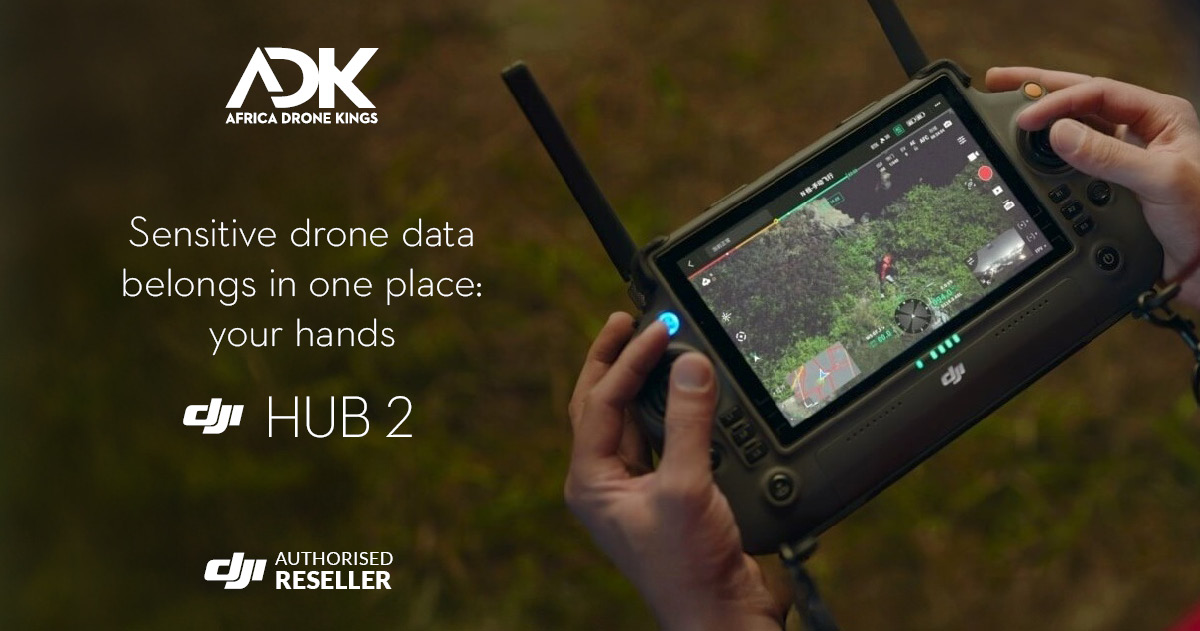
The Response: Secure, On-Premises Drone Management
DJI Hub 2 (FlightHub 2 On-Premises) gives organisations full control over their aerial operations by keeping every byte of data protected and managed on their own terms. Built for government agencies, energy utilities, and enterprise users, it’s a complete, self-contained system for planning, managing, and analysing drone missions — with the flexibility to run fully on-premises or as a secure, cloud-based solution.
At the heart of this ecosystem is the DJI FlightHub 2 AIO – an all-in-one, plug-and-play device pre-installed for instant use. It combines both hardware and software for seamless daily operations, deployment, and maintenance. This bundled solution offers the simplicity of a ready-to-go unit with the full security and control of an on-premises system, enabling rapid, worry-free setup for teams with limited IT capacity.
That means:
- Sensitive footage and telemetry data stay within your firewall.
- Operations continue even if your internet connection drops.
- IT teams retain full control over security, compliance, and access permissions.
FlightHub 2 On-Premises also supports continuous and stable upgrades, synchronising core features with the latest public cloud version. Users gain immediate access to new software and hardware capabilities, ensuring their system evolves without disruption. This continuous upgrade model keeps the platform future-ready while maintaining full data control.
With DJI Hub 2, teams can manage DJI Dock deployments, drone fleets, and ground crews through a single interface – maintaining full visibility and command, while keeping data securely stored within their chosen environment, whether on-premises or through a trusted cloud setup.
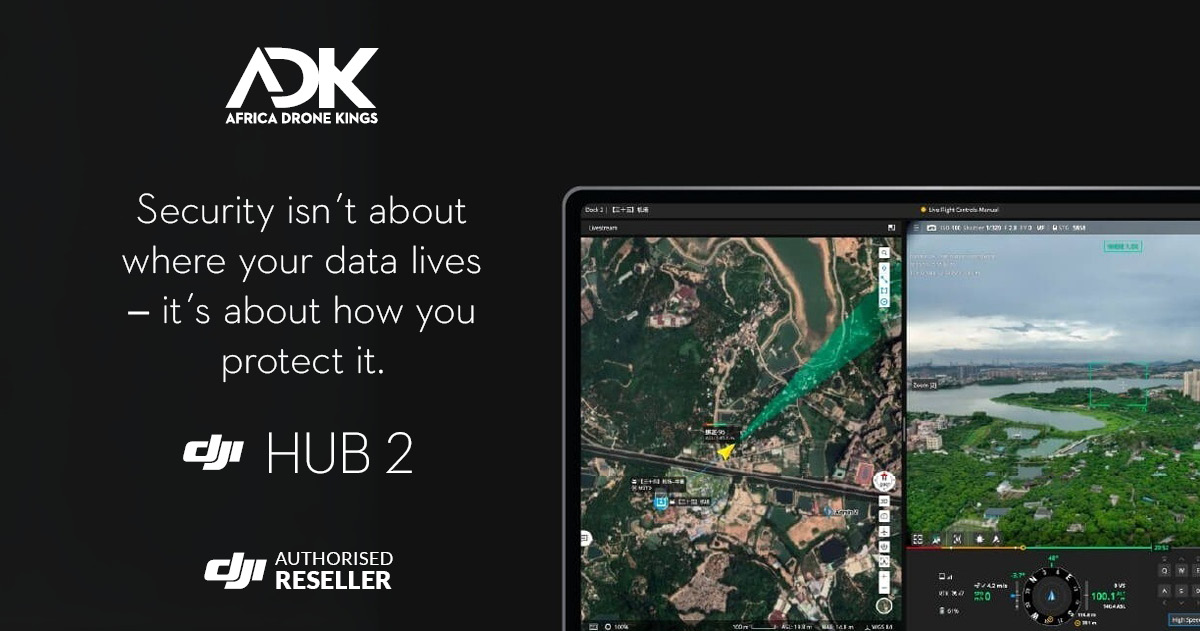
Extending Security Beyond On-Premises
For many organisations, data control isn’t just about where information lives – it’s about how securely it’s managed.
When critical infrastructure is involved – electricity grids, water systems, transportation networks – data breaches don’t just compromise privacy; they endanger safety and service delivery. DJI Hub 2 gives organisations the flexibility to operate with confidence, ensuring that all operational data remains encrypted, traceable, and protected by internal governance protocols. Deployment is fully adaptable; teams can install DJI Hub 2 on physical servers, within private on-premises environments, or in hybrid cloud setups, and even as a SaaS solution on public cloud platforms. This flexibility allows organisations to scale according to their IT maturity, balancing accessibility, compliance, and security without compromising control.
Even in the event of an internet outage or a cyber incident, operations remain uninterrupted. Missions can continue, drones can land, and data can be accessed internally. It’s resilience by design – built for regions where digital reliability can’t always be guaranteed.
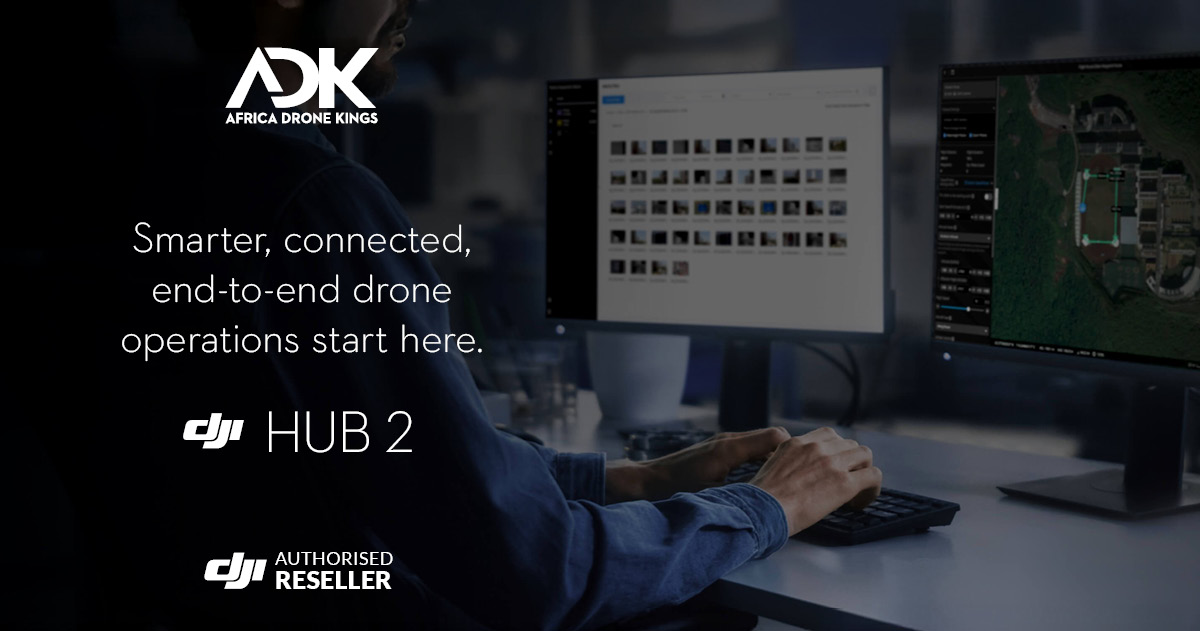
Seamless Integration Across Data, Docks, and Drones
DJI Hub 2 seamlessly integrates with DJI’s broader enterprise ecosystem, including the Dock 3 and the Matrice series drones, to deliver a fully connected operational picture.
From a single, secure dashboard, teams can:
- Plan and schedule missions
- Monitor live video feeds from deployed drones
- Access historical flight data for auditing or analysis
- Overlay live maps and 3D models for situational awareness
Under its modular integration architecture, Hub 2 offers a suite of purpose-built components that make operations smarter and more connected. The Flight Route Editor enables precise 3D route planning directly within organisational systems, while the Virtual Cockpit provides a fully functional remote control interface for mission management. Flight Records allow detailed traceability and post-flight analysis, ensuring accountability and safety compliance.
FlightHub Sync enables livestream forwarding, file synchronisation, and device information updates across teams. For advanced users, open interfaces for algorithms and multimodal LLMs allow integration with pre-trained, industry-specific models – expanding automation, analytics, and AI capabilities within secure boundaries.
The result is an end-to-end ecosystem: autonomous drones capture the data, while Hub 2 securely manages, stores, and visualises it, all under your direct control.
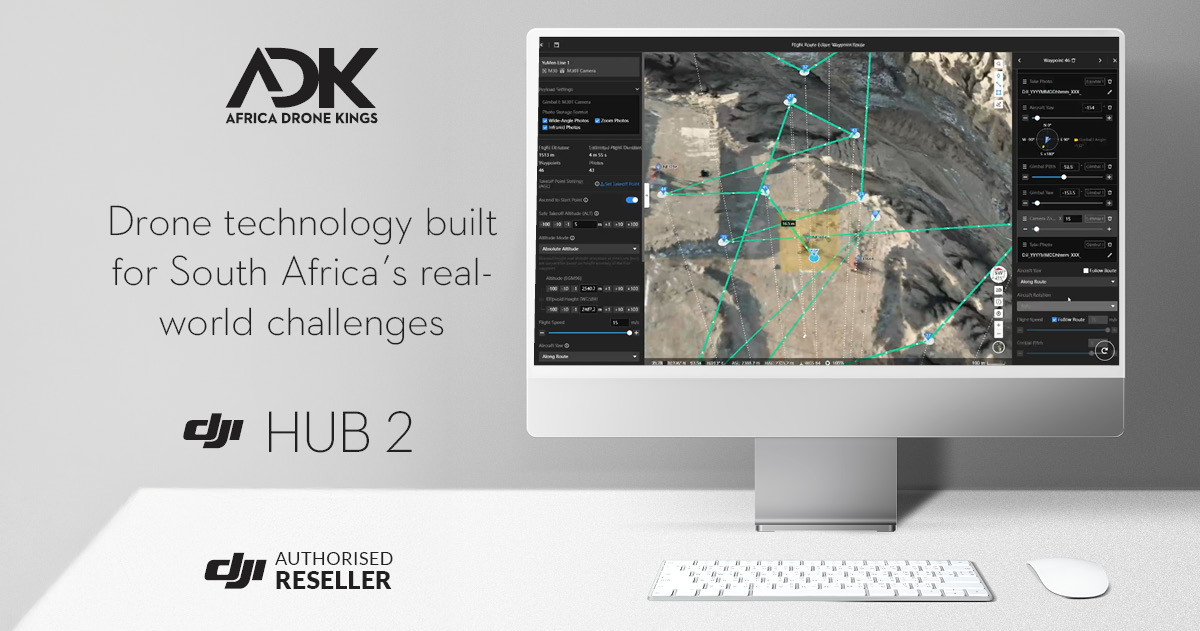
Drone and Data Technology Built for South Africa
South Africa’s infrastructure sectors – from utilities and construction to public safety – operate under unique pressures. They need technology that works when the power doesn’t, that connects when the signal fails, and that protects sensitive data when networks are vulnerable.
DJI Hub 2 is designed precisely for that environment. It gives organisations the confidence to modernise their operations without exposing their data to unnecessary risk.
For example, in an on-premises deployment scenario, a municipality could use drones to inspect water treatment facilities or electrical substations. With DJI Hub 2, every image, every video, and every flight log is stored and processed locally. The system operates securely behind the municipal firewall, protecting critical infrastructure data while giving engineers real-time visual insights.
It’s not just about better efficiency — it’s about building operational independence.
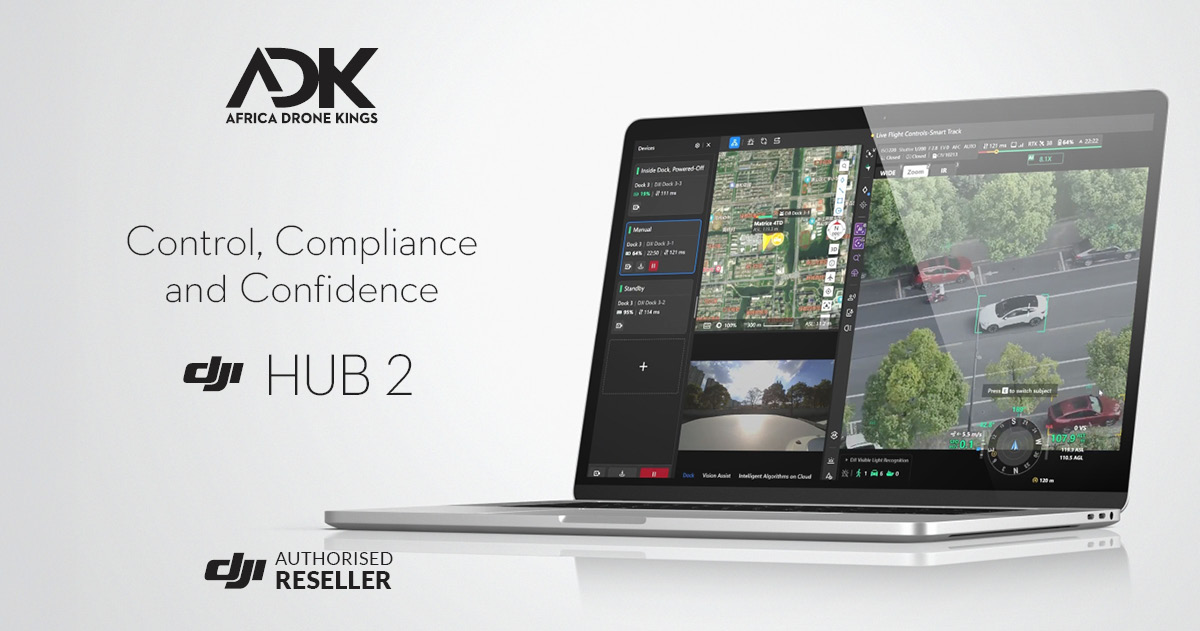
Control, Compliance and Confidence
As regulatory frameworks around drone use and data privacy evolve, the ability to demonstrate compliance has become as important as operational capability.
With Hub 2, administrators can set user permissions, audit activity, and enforce data-handling protocols tailored to their organisation’s policies. The result is not just compliance – it’s traceability and accountability across every operation.
Every mission is recorded. Every file is accounted for. Every byte of data remains exactly where it should be.
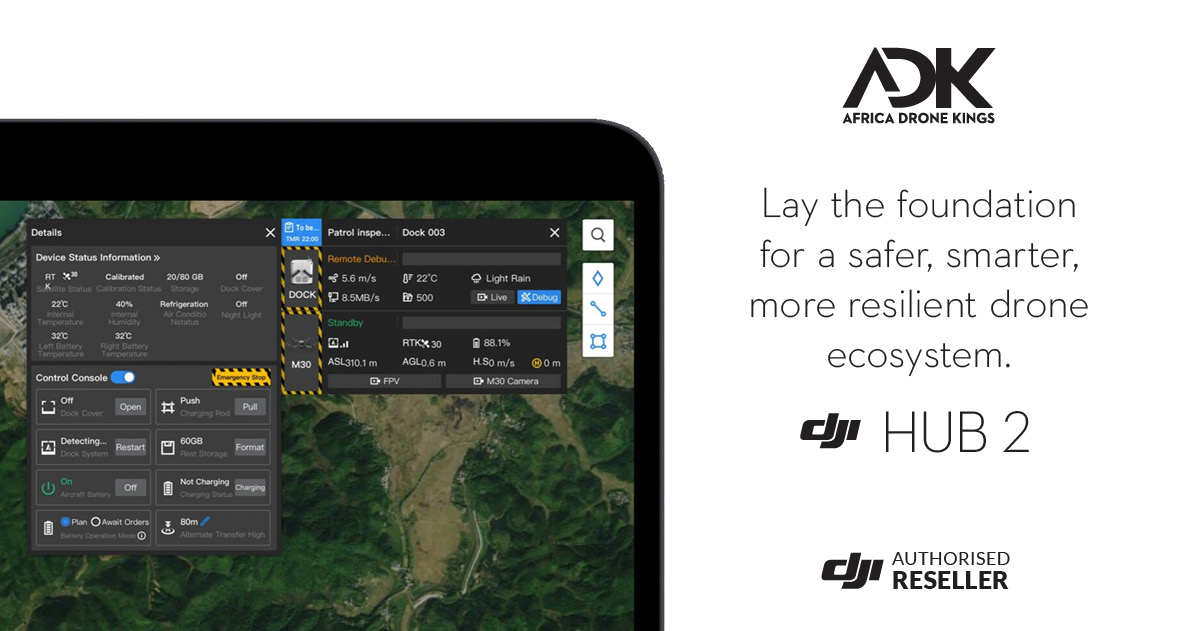
The Future of Secure, Connected Drone Ecosystems
The next frontier of drone operations isn’t defined by distance, but by data – protecting what’s already in the air, and the insights it carries.
DJI Hub 2 empowers organisations to unlock the full potential of drone intelligence, without sacrificing data security. Through its modular architecture, continuous updates, and all-in-one deployment design, it delivers a robust foundation for future enterprise growth all while combining reliability, scalability, and innovation.
It’s the foundation for a smarter, safer, more resilient future – one where South African organisations can innovate with confidence, knowing their information is protected at every level.